
MBA and EMBA – strategic level · Kozminski University
Sustainability and ESG
“Sustainability and ESG” is an interactive course in English for MBA and EMBA students at Kozminski University. 5 thematic modules (module 3 in two parts, 3a and 3b) plus the final assessment, in 8 hours of classes (4 h lectures + 4 h workshops): from the global ESG context through organizational resilience, AI and reporting to governance and universal design.
The course in numbers
- 5 thematic modules
- module 3 in two parts, 3a and 3b, plus the final assessment
- 8 hours of classes
- 4 h lectures + 4 h workshops, 1 ECTS
- MBA and EMBA
- strategic level
- 5 instructors
- ESG, law, security and technology
- 2 assessment options
- strategic or crisis case study
Why ESG is a board decision today
Regulation keeps moving, capital looks at data, and mistakes cost billions. The course starts from facts, and every fact has a source.
-
USD 34.69 bn
is what the dieselgate scandal cost Volkswagen. We discuss the case in module 4.
Source: VW data, 2020
-
about 360
entities in Poland will fall under sustainability reporting after Omnibus I. Before the change, there were about 3,500.
Source: Polish Ministry of Finance, estimate based on Statistics Poland data,
-
16%
of the world’s 2,000 largest companies are on track to reach net zero in their operations by 2050.
-
USD 16.7 tn
in assets sits in funds that declare a responsible or sustainable approach. That is 49% more than two years earlier.
-
76%
of consumers say they would stop buying from a company that treats the environment, its employees or the local community badly.
Source: PwC, Consumer Intelligence Series on ESG, 2021, 5,005 people in five countries
Course program
The modules form one path, but you can open each one on its own. They include discussion questions, exercises and AI tasks. The examples come from Poland and around the world, and we cover EU regulations together with how Poland implements them.
-
Open module 1
Global ESG Context
You understand why ESG is a strategic issue today, not a reputational one: planetary boundaries, stakeholder capitalism, a just transition.
Instructor: Elżbieta Rotblum
-
Open module 2
ESG and Organizational Resilience
You connect the global risks from the WEF Global Risks Report 2026 with your company’s security: hybrid threats, critical infrastructure, industrial espionage.
Instructors: Dr. Anna Tryfon-Bojarska, Lt. Col. Marek Kuźnicki
-
Open module 3a
Technological Transformation and ESG Innovation
You know where AI enters ESG operations, from emissions measurement to Scope 3, and you can tell working technology from greenwashing.
Instructor: Dr. Estera Kot
-
Open module 3b
Reporting, Materiality and ESG Data Management
You understand how data travels into an ESG report, double materiality and the ESRS. You judge whether a report will pass an audit and where AI needs checking.
Instructor: Dr. Estera Kot
-
Open module 4
ESG Governance, Ethics and Compliance
You find your way through the CSRD, the CSDDD, the EU Taxonomy and Omnibus I. You spot gaps in ESG oversight and greenwashing risk in the cases of four companies.
Instructors: Anna Olszewska, Elżbieta Rotblum, Dr. Anna Tryfon-Bojarska
-
Open module 5
Universal Design: the Strong ‘S’
You know the 7 principles and 8 goals of universal design. You see where your organization excludes customers and employees, even when nobody notices.
Instructor: Elżbieta Rotblum
-
Open the final assessment
Group Case Study
Your group analyzes a decision dilemma in one of two variants, strategic or crisis, and defends its recommendation.
Graded by the course instructors
What you will find in the course
Tools and exercises that already work in the course. Each link opens the right module.
- Module 1
Timeline: from Stockholm 1972 to the 2030 Agenda
Half a century of decisions that led to today’s ESG.
- Module 2
Organizational resilience self-assessment
Questions that bring the WEF report’s risks home to your company.
- Module 3a
ESG technology assessment framework
Four questions that separate green tech from greenwashing.
- Module 3a
Your first AI use case
A 10-minute group exercise.
- Module 3b
The PolChem case: AI as a report pre-auditor
A ready prompt and a live five-minute exercise.
- Module 3b
The four most common reporting mistakes
What an auditor checks before signing off a report.
- Module 4
ESG governance maturity matrix
An AI task and a checklist of what every management board should have.
- Module 5
7 principles and 8 goals of universal design
Linked to the ESRS S3 and S4 requirements.
- Final Assessment
Two case study variants
Structure of the work and grading criteria for both variants.
Open materials in Polish
Three public pages you can read without starting the course. They are in Polish. You can read, quote and share each one.
- Program
The course program, module by module
Scope, learning outcomes, key terms and the questions a manager should ask in the company.
- Glossary
ESG Glossary 2026
38 terms, from the CSRD and double materiality to CBAM and greenwashing. Each one sourced in EU or Polish law.
- Article
CSRD after Omnibus I: what changed for Polish companies
Thresholds, deadlines, the value chain, assurance, and what the board should do now. As of .
Instructors
Five practitioners from different sides of ESG: strategy, law, security and technology.
-

Dr. Anna Tryfon-Bojarska
Content lead for the course. Modules 2 and 4
International expert and manager with 17 years of experience in innovation, digitalization, digital security and ESG. University lecturer, trainer, and co-author of scientific publications and industry standards.
LinkedIn · SGH profile · ORCID
-

Elżbieta Rotblum
Modules 1, 4 and 5
Long-time practitioner of CSR, ESG and the circular economy. She advises companies on ESG transformation, from diagnosis through implementation to stakeholder communication.
-

Anna Olszewska
Module 4
Expert in ESG legislation, compliance and corporate governance. She specializes in European regulations such as the CSRD, the EU Taxonomy and the Omnibus, and in how they apply in Poland.
-

Lt. Col. Marek Kuźnicki
Module 2
Security expert: cybersecurity, operational security and analysis of hybrid threats. He specializes in protecting critical infrastructure and building organizational resilience.
-
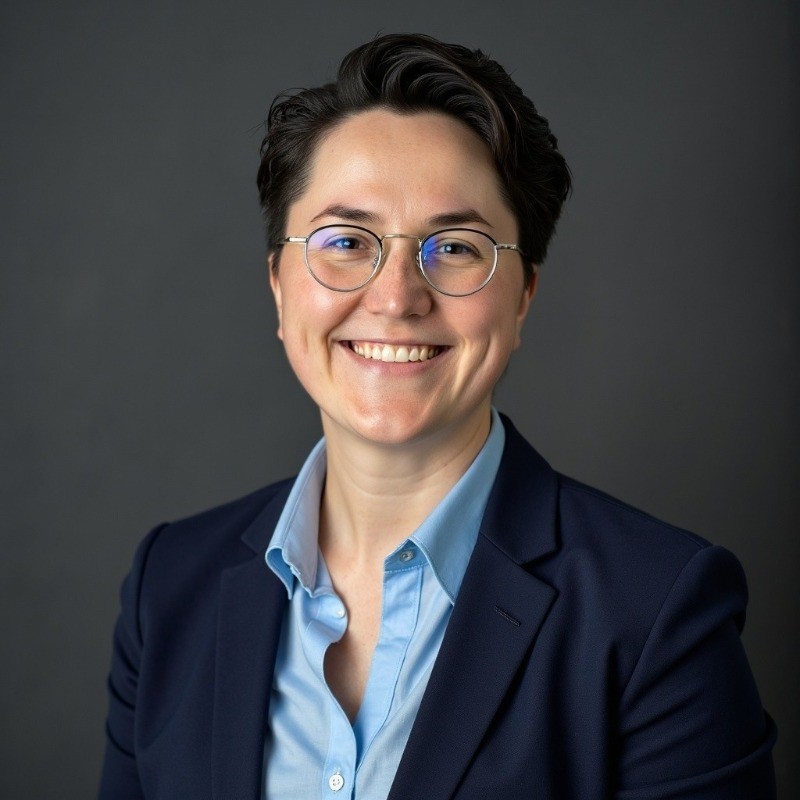
Dr. Estera Kot
Modules 3a and 3b
CTO at Clouds on Mars and assistant professor at Kozminski University. Former Principal Product Manager at Microsoft, where she owned the Apache Spark runtime in Azure Synapse Analytics and Microsoft Fabric and created the Native Execution Engine; Ph.D. with distinction from Warsaw University of Technology.
Train your management board
Want a session like this for your management board or leadership team? Contact the course team directly.
Frequently asked questions
Who is the “Sustainability and ESG” course for?
For MBA and EMBA students at Kozminski University: managers, board members and people who make business decisions. The course works at a strategic level and needs no technical knowledge or IT tools.
How long is the course?
8 hours of classes (4 h lectures + 4 h workshops). The module material takes about 4 h 45 min: modules 1, 2 and 4 take 60 min each, modules 3a and 3b 30 min each, and module 5 takes 45 min. Group work on the final assessment comes on top.
What does the course cover?
5 thematic modules (module 3 in two parts, 3a and 3b) plus the final assessment: the global ESG context, organizational resilience, technology and AI, reporting and data, governance and compliance, and universal design. The course ends with a group case study.
How does the final assessment work?
The final assessment is a group case study in one of two variants: strategic, an analysis of a dilemma with a KPI-based recommendation, or crisis, the ESG Crisis Task Force. The course describes the grading criteria. Your instructor sets the deadline and the submission format.
Who teaches the course?
Five instructors: Dr. Anna Tryfon-Bojarska (content lead), Dr. Estera Kot, Elżbieta Rotblum, Anna Olszewska and Lt. Col. Marek Kuźnicki.
What language is the course in?
This version runs in English. The same course also runs in Polish, in the Polish version. Some linked sources, such as Polish laws and reports, may be available only in Polish.
The course opens in your browser
It works on a computer and a phone, with nothing to install. Start with module 1 or pick a module from the program.
Start the course